Why this change: SEO title uses Title Case to match example CLEAN.docx; H1 stays sentence case with H1: prefix per SOP.
SEO title: How to Remove and Prevent Black Mould on Windows in Canada
Why this change: Meta description rewritten for primary intent + safe DIY + when assessment beats cleaning — CTR-focused, no hard-sell ROI claims.
Meta description: Learn why black mould keeps coming back on windows, how to clean it safely, and when better ventilation or a window assessment is the real fix.
Why this change: URL slug stays unchanged so equity and GSC history stay on this URL.
URL slug: https://www.windowscanada.com/whitepages/how-remove-and-prevent-black-mold-windows.html (unchanged)
Why this change: Full refreshed article below. Every add/delete/replace has a Why-this-change argument. Deleted live blocks keep original hierarchy (H1/H2/H3/list/quote).
H1: How to remove and prevent black mould on windows in Canada
Why this change: One-sentence banner intro after hero (moisture/condensation framing).
Why does black mould keep coming back around windows?
In many homes, black mould around windows starts as a small patch in the corner of the frame or along the bottom seal, then slowly spreads through the winter season despite repeated cleaning.
What we often notice during inspections is that the mould itself is usually not the main problem. In many Canadian homes, the real cause is trapped condensation, poor air circulation, cold glass surfaces, or older windows that no longer insulate properly during temperature swings.
We also regularly see situations where homeowners clean the mould several times, but the moisture keeps returning because the window system itself is allowing condensation to build up around the frame and sill area.
This article explains why black mould forms around windows, how to clean it safely, what signs may indicate a larger moisture issue, and what we typically look for when evaluating older window systems in Canadian climates.
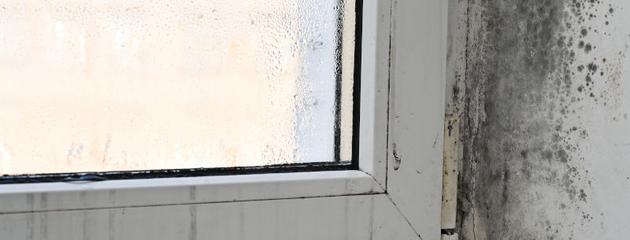
Black mould on windows is usually a moisture and condensation problem, not a cleaning failure.
H2: Key takeaways
Why this change: Adds one US-spelling (“black mold”) parity line so the page still owns the Canadian primary keyword while matching how CA searchers sometimes type it. Adds one soft contextual link to the windows hub when replacement is the real fix — keeps transactional intent on /windows.html, not on this blog URL.
- I n many homes, black mould around windows starts with just a few dark spots near the corner of the frame, then quietly spreads every winter despite repeated cleaning.
- We often hear the same frustration during consultations: “We cleaned it already… why does it keep coming back?” In most cases, the mould itself is not the root problem.
- Cold glass, trapped condensation, poor airflow, and older, leaking window systems are among the most common conditions that lead to recurring mould growth.
- In older bedrooms, basements, and bathrooms, mould around windows is often one of the first visible signs that moisture is no longer being controlled properly indoors.
- Some homeowners try stronger cleaning products for months before realizing the issue is connected to insulation gaps, failed seals, or constant condensation around the window.
- Better ventilation and humidity control can help reduce mould growth, but recurring moisture around the same window usually points to a deeper performance issue.
- In real renovation projects, long-term improvement often comes only after the moisture source itself is corrected, whether through sealing repairs, insulation upgrades, or replacement of older window systems.
- Black mould (and the US-spelled “black mold”) around windows often starts as a few dark spots on the frame, sill, or seal, then returns each winter if moisture stays.
- Condensation on cold glass, air leakage, aging seals, and weak airflow are the usual drivers in Canadian homes.
- Safe DIY cleaning can clear small spots, but mould that returns quickly means the moisture source is still there.
- Lower indoor humidity, better exhaust, and clear airflow to the glass reduce risk.
- Chronic mould, daily winter condensation, drafts, or damaged trim usually need a professional window and opening assessment.
- Modern, well-installed windows raise interior glass temperature and cut moisture pathways that feed mould.
Why this change: Adds one US-spelling (“black mold”) parity line so the page still owns the Canadian primary keyword while matching how CA searchers sometimes type it. Retitles this section for clearer intent/scan fit (live “What black mould on windows is, and why it appears so often in Canada” → refreshed “What black mould on windows is, and why it shows up in Canada”) while preserving hierarchy level. Tightens wording for CCW voice (shorter, plain Canadian English) without changing the underlying technical advice.
What black mould on windows is, and why it appears so often in Canada
Mould is a natural fungus that grows wherever moisture and organic material are present. Window frames , gaskets, wood trim, and dust accumulation provide ideal surfaces for mould when moisture remains for extended periods.
Canadian homes are particularly vulnerable because winter conditions create large temperature differences between indoor air and window glass. Warm indoor air holds moisture. When that air touches cold window surfaces, condensation forms. If condensation becomes frequent or remains on the frame and sill, mould growth becomes likely.
Windows are often the first place where moisture problems become visible, since they're typically the coldest interior surface in the building envelope.
H2: What black mould on windows is, and why it shows up in Canada
Mould is a fungus that grows where moisture and organic material meet. Window frames, gaskets, wood trim, and dust give it a surface when condensation lingers.
Canadian winters create large temperature gaps between warm indoor air and cold glass. Warm air holds moisture. When that air hits cold window surfaces, water forms. If condensation is frequent or sits on the frame and sill, black mould on windows becomes likely. Searchers often type “black mold on windows” as well; the cause is the same moisture pattern.
Windows are often the first place moisture problems show, because glass is typically the coldest interior surface in the building envelope.
H3: Where black mould commonly develops around windows
Why this change: Explicit window-condensation-mould language in causes.
| Location on the window | Why does mould form there | What does it usually indicate |
|---|---|---|
| Lower frame and sill | Condensation collects and dries slowly | Cold surface and limited airflow |
| Corners of the frame | Air leakage and thermal bridging | Installation or sealing weaknesses |
| Behind gaskets and weatherstripping | Trapped moisture | Aging seals or compression failure |
| Adjacent drywall or trim | Moisture migration from the window opening | Potential insulation or flashing issues |
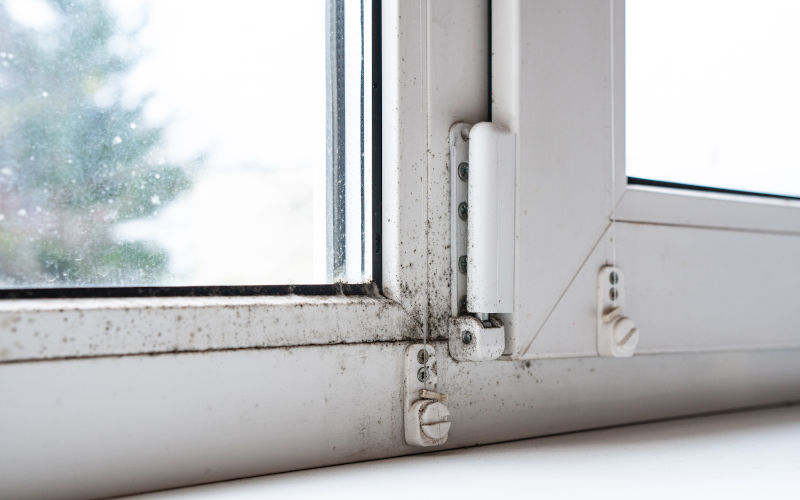
| Location on the window | Why mould forms there | What it usually indicates |
|---|---|---|
| Lower frame and sill | Condensation collects and dries slowly | Cold surface and limited airflow |
| Corners of the frame | Air leakage and thermal bridging | Installation or sealing weaknesses |
| Behind gaskets and weatherstripping | Trapped moisture | Aging seals or compression failure |
| Adjacent drywall or trim | Moisture migrating from the opening | Possible insulation or flashing issues |
Why this change: Retitles this section for clearer intent/scan fit (live “Why black mould on windows is more than a cosmetic problem” → refreshed “Why black mould on windows is more than cosmetic”) while preserving hierarchy level. Tightens wording for CCW voice (shorter, plain Canadian English) without changing the underlying technical advice.
Why black mould on windows is more than a cosmetic problem
Black mould is not only unsightly. Over time, it can damage window components, stain finishes, and degrade sealants. More importantly, mould growth contributes to poor indoor air quality.
Children, seniors, and people with asthma or respiratory sensitivities are particularly vulnerable to prolonged exposure to mould. Even when health symptoms aren't immediately obvious, recurring mould indicates that moisture is affecting the building envelope, something that shouldn't be ignored.
H2: Why black mould on windows is more than cosmetic
Black mould is not only unsightly. Over time it can stain finishes, degrade sealants, and damage window components. It also hurts indoor air quality.
Children, seniors, and people with asthma or respiratory sensitivities are more vulnerable to prolonged mould exposure. Even when symptoms are mild, recurring mould is a sign that moisture is affecting the window opening and should not be ignored.
H2: The real causes of black mould on windows
Why this change: Drops numbered cause labels (1. / 2. / 3.) for sentence-case `H3:` prefixes that match example CLEAN.docx and the SOP heading pattern. Retitles this section for clearer intent/scan fit (live “1. Persistent condensation on cold glass” → refreshed “Persistent condensation on cold glass”) while preserving hierarchy level. Tightens wording for CCW voice (shorter, plain Canadian English) without changing the underlying technical advice.
1. Persistent condensation on cold glass
When interior glass temperatures remain low, moisture repeatedly forms and feeds mould colonies along frames and sills.
H3: Persistent condensation on cold glass
When interior glass stays cold, moisture forms again and again and feeds colonies along frames and sills. This is the classic window condensation mould pattern in Canadian winters.
Why this change: Drops numbered cause labels (1. / 2. / 3.) for sentence-case `H3:` prefixes that match example CLEAN.docx and the SOP heading pattern. Retitles this section for clearer intent/scan fit (live “2. Air leakage around the window opening” → refreshed “Air leakage around the window opening”) while preserving hierarchy level. Tightens wording for CCW voice (shorter, plain Canadian English) without changing the underlying technical advice.
2. Air leakage around the window opening
Unsealed or poorly sealed installation gaps allow cold exterior air to cool interior surfaces and introduce moisture pathways.
H3: Air leakage around the window opening
Gaps in installation or perimeter sealing let cold exterior air cool interior surfaces and create moisture pathways.
Why this change: Drops numbered cause labels (1. / 2. / 3.) for sentence-case `H3:` prefixes that match example CLEAN.docx and the SOP heading pattern. Retitles this section for clearer intent/scan fit (live “3. Failing window seals and gaskets” → refreshed “Failing window seals and gaskets”) while preserving hierarchy level. Tightens wording for CCW voice (shorter, plain Canadian English) without changing the underlying technical advice.
3. Failing window seals and gaskets
As seals age, they lose elasticity and compression, allowing moisture to collect inside the frame system.
H3: Failing window seals and gaskets
As seals age, they lose elasticity and compression. Moisture then collects inside the frame system.
Why this change: Drops numbered cause labels (1. / 2. / 3.) for sentence-case `H3:` prefixes that match example CLEAN.docx and the SOP heading pattern. Retitles this section for clearer intent/scan fit (live “4. Inadequate ventilation and airflow” → refreshed “Inadequate ventilation and airflow”) while preserving hierarchy level. Tightens wording for CCW voice (shorter, plain Canadian English) without changing the underlying technical advice.
4. Inadequate ventilation and airflow
Bathrooms, kitchens, and bedrooms generate significant moisture. Without effective exhaust and circulation, humidity remains trapped at window surfaces.
H3: Inadequate ventilation and airflow
Bathrooms, kitchens, and bedrooms add a lot of moisture. Without effective exhaust and circulation, humidity sits at the glass.
Why this change: Drops numbered cause labels (1. / 2. / 3.) for sentence-case `H3:` prefixes that match example CLEAN.docx and the SOP heading pattern. Keeps the already-live expert quote (Helen/Tony) — not newly invented — and formats it as a proper quote block with the author about-page link. Retitles this section for clearer intent/scan fit (live “5. Older window designs and glazing” → refreshed “Older window designs and glazing”) while preserving hierarchy level. Tightens wording for CCW voice (shorter, plain Canadian English) without changing the underlying technical advice.
5. Older window designs and glazing
Older windows typically maintain colder interior surface temperatures, increasing the frequency and duration of condensation.
“ When black mould keeps coming back around windows, it usually means moisture is entering or condensing inside the window assembly. Cleaning alone cannot correct installation issues, failed seals, or outdated window systems,” explains Tony Wong, Project Manager at Canadian Choice Windows & Doors™ .
H3: Older window designs and glazing
Older windows often keep colder interior surface temperatures, so condensation lasts longer and mould returns after cleaning.
“When black mould keeps coming back around windows, it usually means moisture is entering or condensing inside the window assembly. Cleaning alone cannot correct installation issues, failed seals, or outdated window systems,” explains Tony Wong, Project Manager at Canadian Choice Windows & Doors™.
H2: How to prevent black mould on windows before it starts
H3: Control indoor moisture at the source
Why this change: Tightens wording for CCW voice (shorter, plain Canadian English) without changing the underlying technical advice.
- Use bathroom exhaust fans during showers and for at least 20 to 30 minutes afterwards.
- Operate kitchen range hoods while cooking.
- Avoid drying clothes inside living areas whenever possible.
- Repair plumbing leaks immediately.
- Monitor indoor humidity using a simple hygrometer.
- Run bathroom exhaust fans during showers and for about 20 to 30 minutes afterward.
- Use kitchen range hoods while cooking.
- Avoid drying clothes in living areas when you can.
- Fix plumbing leaks promptly.
- Track indoor humidity with a simple hygrometer.
H3: Improve airflow to window surfaces
Why this change: Tightens wording for CCW voice (shorter, plain Canadian English) without changing the underlying technical advice.
- Keep blinds and curtains slightly open to allow warm air to circulate.
- Ensure heating registers beneath windows aren't blocked.
- Use low-speed ceiling fans to maintain gentle air movement.
- Keep blinds and curtains slightly open so warm air can reach the glass.
- Keep heating registers under windows clear.
- Use a low-speed ceiling fan for gentle air movement when it helps.
H3: Inspect seals and perimeter caulking regularly
Why this change: Tightens wording for CCW voice (shorter, plain Canadian English) without changing the underlying technical advice.
Small failures in caulking and weatherstripping allow cold air infiltration and moisture entry. An annual inspection helps prevent the slow accumulation of moisture, which encourages mould growth.
Small failures in caulking and weatherstripping invite cold air and moisture. An annual check helps stop the slow build-up that feeds mould.
Why this change: Renames the DIY H2 toward the supporting how-to keyword (“how to remove black mould from windows”) while keeping the same safe steps. Retitles this section for clearer intent/scan fit (live “The DIY approach: how to clean black mould on windows safely” → refreshed “How to remove black mould from windows safely (DIY)”) while preserving hierarchy level. Tightens wording for CCW voice (shorter, plain Canadian English) without changing the underlying technical advice.
The DIY approach: how to clean black mould on windows safely
Small, localized mould spots can be cleaned when the area is limited and the underlying moisture source is controlled.
H2: How to remove black mould from windows safely (DIY)
Small, localized spots can be cleaned when the area is limited and you also address moisture.
H3: Basic cleaning steps
Why this change: Keep educational mould-removal + prevention; soft-link windows hub when replacement is the fix.
- Wear gloves and a protective mask.
- Use a mild detergent, vinegar solution, or appropriate mould cleaner.
- Gently scrub the affected area without damaging finishes.
- Rinse thoroughly and dry completely.
- Improve ventilation immediately after cleaning.
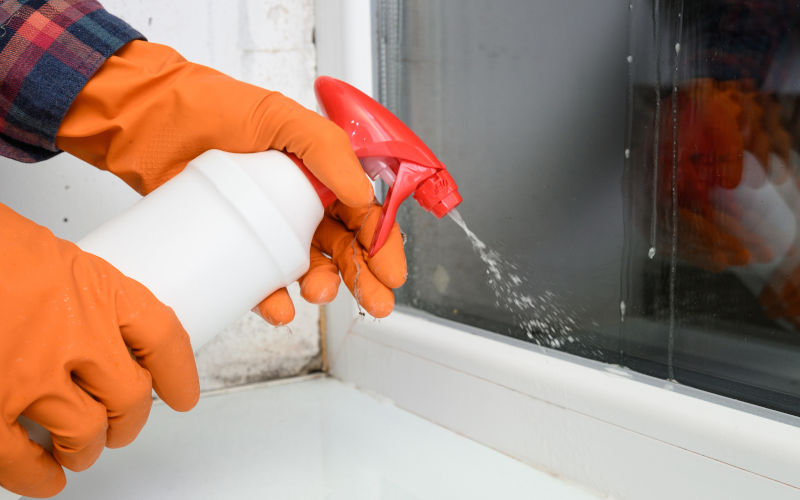
1. Wear gloves and a protective mask. 2. Use a mild detergent, vinegar solution, or a mould cleaner made for the surface. 3. Gently scrub without damaging finishes. 4. Rinse thoroughly and dry completely. 5. Improve ventilation right after cleaning.
Why this change: Keeps the already-live expert quote (Helen/Tony) — not newly invented — and formats it as a proper quote block with the author about-page link. Retitles this section for clearer intent/scan fit (live “Why does mould keep coming back after cleaning” → refreshed “Why mould keeps coming back after cleaning”) while preserving hierarchy level. Tightens wording for CCW voice (shorter, plain Canadian English) without changing the underlying technical advice.
Why does mould keep coming back after cleaning
Repeated mould regrowth usually indicates that moisture remains within the window system or opening. Trapped condensation, cold-framed members, and air leakage continue to feed mould growth even after aggressive cleaning.
In many homes, repeated cleaning can mask a deeper building-performance issue that only a professional assessment can identify.
“ We encourage homeowners to focus on solving the source of moisture, not just the visible mould. Proper inspection and professional installation are what prevent the problem from returning,” adds Helen Sin, Consumer Success Manager at Canadian Choice Windows & Doors™ .
H2: Why mould keeps coming back after cleaning
If mould returns soon after you clean, moisture is still inside the window system or opening. Trapped condensation, cold frames, and air leakage keep feeding growth even after aggressive scrubbing.
In many homes, repeated cleaning only hides a building-performance issue that a proper assessment can identify.
“We encourage homeowners to focus on solving the source of moisture, not just the visible mould. Proper inspection and professional installation are what prevent the problem from returning,” adds Helen Sin, Consumer Success Manager at Canadian Choice Windows & Doors™.
H2: When window replacement becomes the right solution
Why this change: Adds one soft contextual link to the windows hub when replacement is the real fix — keeps transactional intent on /windows.html, not on this blog URL. Tightens wording for CCW voice (shorter, plain Canadian English) without changing the underlying technical advice.
Window replacement isn't always required for minor surface mould. However, it becomes the most reliable solution when mould continues to return despite good ventilation and humidity control:
- Mould returns shortly after repeated cleanings.
- Condensation is visible almost daily during winter.
- Air drafts are noticeable around frames.
- Seals and gaskets show visible deterioration.
- Surrounding trim or drywall shows moisture damage.
Modern windows installed by Canadian Choice Windows & Doors™ reduce the risk of mould by improving airtightness, increasing the interior glass temperature, and eliminating moisture pathways created by aging assemblies.
You do not always need new windows for a small surface patch. Replacement becomes the more reliable path when mould returns despite solid ventilation and humidity habits, especially if you also see:
- Mould returning shortly after repeated cleanings
- Condensation almost daily in winter
- Noticeable drafts around frames
- Visible deterioration of seals and gaskets
- Moisture damage on surrounding trim or drywall
Modern windows from Canadian Choice Windows & Doors™ are uPVC casement units built for Canadian climates. Properly installed, they help by improving airtightness, raising interior glass temperature, and closing moisture pathways left by aging assemblies.
Why this change: Retitles this section for clearer intent/scan fit (live “Why professional installation matters as much as the window itself” → refreshed “Why professional installation matters as much as the window”) while preserving hierarchy level. Tightens wording for CCW voice (shorter, plain Canadian English) without changing the underlying technical advice.
Why professional installation matters as much as the window itself
Even the best-performing window can't prevent mould if it's poorly installed. Gaps in air barriers, improper insulation at openings, and weak perimeter sealing allow cold air and moisture to migrate.
Canadian Choice Windows & Doors™ focuses on professional assessment, precise installation practices, and long-term performance, not short-term cosmetic fixes.
H2: Why professional installation matters as much as the window
Even a strong window cannot stop mould if the opening is poorly sealed. Gaps in the air barrier, weak insulation at the rough opening, and thin perimeter sealing let cold air and moisture migrate.
Canadian Choice Windows & Doors™ focuses on assessment, precise installation, and long-term performance, not short-term cosmetic fixes alone.
Why this change: Corrects “vinyl” product language to uPVC casement per CCW facts; wood/fiberglass stay educational comparison only, not CCW window SKUs. Retitles this section for clearer intent/scan fit (live “Vinyl windows vs. wood windows for mould resistance” → refreshed “uPVC windows vs wood windows for mould resistance”) while preserving hierarchy level.
Vinyl windows vs. wood windows for mould resistance
| Feature | Vinyl windows | Wood windows |
|---|---|---|
| Moisture resistance | Highly resistant to moisture and swelling | Sensitive to prolonged moisture exposure |
| Maintenance | Low | High and ongoing |
| Practical mould resistance | Generally higher | Lower if moisture persists |
| Best application | Most Canadian climates and households | Design-driven projects with careful moisture control |
H3: uPVC windows vs wood windows for mould resistance
| Feature | uPVC (vinyl) windows | Wood windows |
|---|---|---|
| Moisture resistance | Highly resistant to moisture and swelling | Sensitive to prolonged moisture exposure |
| Maintenance | Low | High and ongoing |
| Practical mould resistance | Generally higher | Lower if moisture persists |
| Best application | Most Canadian climates and households | Design-driven projects with careful moisture control |
Canadian Choice Windows & Doors™ supplies uPVC casement windows (not wood or fiberglass as CCW products). Wood remains a common material in older homes and is included here only for comparison.
H3: Solution comparison for black mould on windows
Why this change: Tightens wording for CCW voice (shorter, plain Canadian English) without changing the underlying technical advice.
| Solution | Best for | Advantages | Limitations |
|---|---|---|---|
| Ventilation and humidity control | Early or mild mould cases | Low cost, fast impact | Requires consistent habits |
| DIY cleaning | Small isolated spots | Immediate cosmetic improvement | Mould often returns |
| Targeted air sealing | Draft-driven condensation | Improves comfort | Does not fix cold glass |
| Window replacement | Chronic mould and failed windows | Permanent moisture control and comfort | Higher upfront investment |
| Solution | Best for | Advantages | Limitations |
|---|---|---|---|
| Ventilation and humidity control | Early or mild cases | Low cost, fast impact | Needs consistent habits |
| DIY cleaning | Small isolated spots | Immediate cosmetic improvement | Mould often returns |
| Targeted air sealing | Draft-driven condensation | Improves comfort | Does not fix cold glass alone |
| Window replacement | Chronic mould and failed windows | Stronger moisture control and comfort | Higher upfront investment |
H2: What this looks like in a real renovation project
Why this change: Tightens wording for CCW voice (shorter, plain Canadian English) without changing the underlying technical advice.
A common pattern we see is mould returning on multiple bedroom or living room windows every winter, despite regular cleaning and the use of a dehumidifier. A professional inspection typically finds air leakage and aging insulated-glass units behind the visible mould, not just a cleaning problem. Once the affected windows are replaced with modern, energy-efficient units and properly installed, condensation levels drop noticeably, mould doesn't return the following season, and comfort improves, with fewer drafts overall.
A pattern we often see: mould returns on several bedroom or living-room windows every winter, even with regular cleaning and a dehumidifier. Inspection usually finds air leakage and aging insulated-glass units behind the visible mould, not only a housekeeping issue. After the affected units are replaced with modern, energy-efficient windows and installed correctly, condensation typically drops, mould does not return the next season, and drafts ease.
H3: A practical homeowner checklist
Why this change: Tightens wording for CCW voice (shorter, plain Canadian English) without changing the underlying technical advice.
- Identify where mould appears and how quickly it returns after cleaning.
- Note where mould appears and how fast it returns after cleaning.
- Measure indoor humidity in affected rooms for at least one week.
Why this change: Tightens wording for CCW voice (shorter, plain Canadian English) without changing the underlying technical advice.
- Verify that exhaust fans are vented outdoors and operate effectively.
- Confirm exhaust fans vent outdoors and work properly.
- Inspect window seals and interior trim for air leakage.
Why this change: Tightens wording for CCW voice (shorter, plain Canadian English) without changing the underlying technical advice.
- Schedule a professional window and opening assessment if mould persists.
- Book a professional window and opening assessment if mould persists.
H2: Why Canadian Choice Windows & Doors is a solid partner for mould problems
Why this change: Adds the verified 25-year transferable warranty only where a product solution is mentioned — required CCW fact; never “lifetime.”
Black mould around windows is a building-performance problem, not a housekeeping failure. Canadian Choice Windows & Doors™ focuses on clear diagnostics, transparent recommendations, and solutions that correct moisture and condensation conditions at the source.
From assessment through installation, the goal is to restore comfort, protect indoor air quality, and prevent mould from returning, not simply to replace products.
Black mould around windows is a building-performance issue, not a personal failure. Canadian Choice Windows & Doors™ focuses on clear diagnostics, transparent recommendations, and fixes that address moisture and condensation at the source.
From assessment through installation, the goal is comfort, healthier indoor air, and lasting prevention, not product replacement for its own sake. When windows are part of the solution, coverage includes a 25-year transferable warranty.

Why this change: Softens the closing CTA heading and copy — educational next step (free consultation) without urgency language. Retitles this section for clearer intent/scan fit (live “Don't ignore black mould on windows” → refreshed “Address black mould on windows early”) while preserving hierarchy level. Tightens wording for CCW voice (shorter, plain Canadian English) without changing the underlying technical advice.
Don't ignore black mould on windows
Black mould on windows is a warning sign that moisture is affecting your home. When ignored, it can damage finishes, compromise comfort, and affect indoor air quality.
For homeowners seeking a lasting solution, Canadian Choice Windows & Doors™ offers professional evaluations and modern window solutions designed for Canadian climates, helping you address mould at its source and protect your home in the long term.
Book a Free Consultation
The trusted choice. Canadian-made.
H2: Address black mould on windows early
Black mould on windows is a warning that moisture is affecting your home. Left alone, it can damage finishes, reduce comfort, and affect indoor air quality.
If you want a lasting plan, Canadian Choice Windows & Doors™ can assess the opening, explain options without pressure, and help you decide whether cleaning, sealing, or new windows is the right next step for your climate and home.
The trusted choice. Canadian made.
H2: FAQs
H3: Why does black mould keep returning even after cleaning?
Because moisture, air leakage, or cold surfaces remain. Cleaning removes visible mould but not the conditions that cause it.
H3: Can dehumidifiers alone stop mould on windows?
Why this change: Tightens wording for CCW voice (shorter, plain Canadian English) without changing the underlying technical advice.
They can help reduce humidity, but they cannot correct cold glass surfaces, failed seals or installation issues.
They can lower humidity, but they cannot fix cold glass, failed seals, or installation gaps on their own.
H3: Is black mould on windows dangerous?
Prolonged mould exposure can affect indoor air quality and aggravate respiratory conditions. It should be addressed promptly.
H3: Does every mould problem require window replacement?
Why this change: Tightens wording for CCW voice (shorter, plain Canadian English) without changing the underlying technical advice.
No. Early, mild cases may be resolved through ventilation and sealing. Chronic recurrence usually requires professional evaluation.
No. Early, mild cases may improve with ventilation and sealing. Chronic recurrence usually needs a professional evaluation.
H3: How long should a proper mould solution last?
Why this change: Tightens wording for CCW voice (shorter, plain Canadian English) without changing the underlying technical advice.
When the root cause is properly corrected, mould should not return season after season.
When the root cause is corrected, mould should not return season after season.
H3: What is the safest next step if I am unsure?
Why this change: Tightens wording for CCW voice (shorter, plain Canadian English) without changing the underlying technical advice.
A professional assessment from Canadian Choice Windows & Doors provides clarity before investing in repeated short‑term fixes.
A professional assessment from Canadian Choice Windows & Doors provides clarity before you spend more on short-term fixes.