SEO title: How to Remove and Prevent Black Mould on Windows in Canada
Meta description: Learn why black mould keeps coming back on windows, how to clean it safely, and when better ventilation or a window assessment is the real fix.
URL slug: https://www.windowscanada.com/whitepages/how-remove-and-prevent-black-mold-windows.html (unchanged)
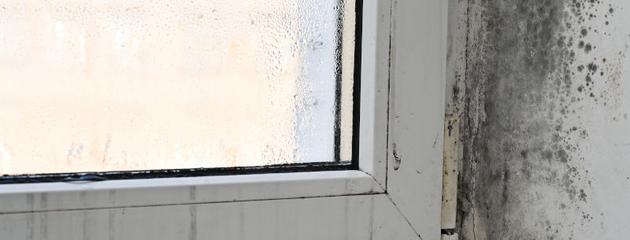
Black mould on windows is usually a moisture and condensation problem, not a cleaning failure.
Mould is a fungus that grows where moisture and organic material meet. Window frames, gaskets, wood trim, and dust give it a surface when condensation lingers.
Canadian winters create large temperature gaps between warm indoor air and cold glass. Warm air holds moisture. When that air hits cold window surfaces, water forms. If condensation is frequent or sits on the frame and sill, black mould on windows becomes likely. Searchers often type “black mold on windows” as well; the cause is the same moisture pattern.
Windows are often the first place moisture problems show, because glass is typically the coldest interior surface in the building envelope.
| Location on the window | Why mould forms there | What it usually indicates |
|---|---|---|
| Lower frame and sill | Condensation collects and dries slowly | Cold surface and limited airflow |
| Corners of the frame | Air leakage and thermal bridging | Installation or sealing weaknesses |
| Behind gaskets and weatherstripping | Trapped moisture | Aging seals or compression failure |
| Adjacent drywall or trim | Moisture migrating from the opening | Possible insulation or flashing issues |
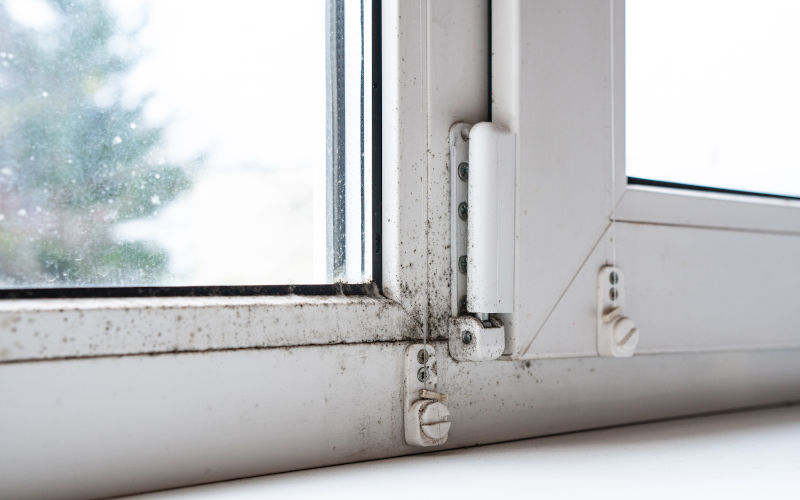
Black mould is not only unsightly. Over time it can stain finishes, degrade sealants, and damage window components. It also hurts indoor air quality.
Children, seniors, and people with asthma or respiratory sensitivities are more vulnerable to prolonged mould exposure. Even when symptoms are mild, recurring mould is a sign that moisture is affecting the window opening and should not be ignored.
When interior glass stays cold, moisture forms again and again and feeds colonies along frames and sills. This is the classic window condensation mould pattern in Canadian winters.
Gaps in installation or perimeter sealing let cold exterior air cool interior surfaces and create moisture pathways.
As seals age, they lose elasticity and compression. Moisture then collects inside the frame system.
Bathrooms, kitchens, and bedrooms add a lot of moisture. Without effective exhaust and circulation, humidity sits at the glass.
Older windows often keep colder interior surface temperatures, so condensation lasts longer and mould returns after cleaning.
“When black mould keeps coming back around windows, it usually means moisture is entering or condensing inside the window assembly. Cleaning alone cannot correct installation issues, failed seals, or outdated window systems,” explains Tony Wong, Project Manager at Canadian Choice Windows & Doors™.
Small failures in caulking and weatherstripping invite cold air and moisture. An annual check helps stop the slow build-up that feeds mould.
Small, localized spots can be cleaned when the area is limited and you also address moisture.
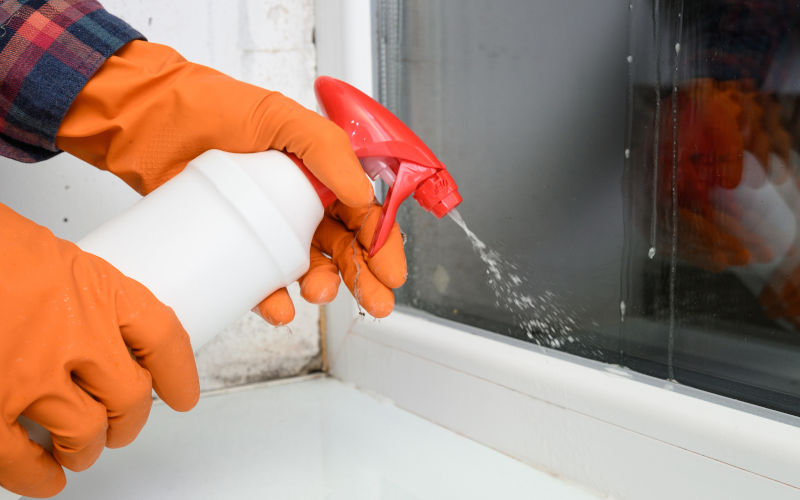
If mould returns soon after you clean, moisture is still inside the window system or opening. Trapped condensation, cold frames, and air leakage keep feeding growth even after aggressive scrubbing.
In many homes, repeated cleaning only hides a building-performance issue that a proper assessment can identify.
“We encourage homeowners to focus on solving the source of moisture, not just the visible mould. Proper inspection and professional installation are what prevent the problem from returning,” adds Helen Sin, Consumer Success Manager at Canadian Choice Windows & Doors™.
You do not always need new windows for a small surface patch. Replacement becomes the more reliable path when mould returns despite solid ventilation and humidity habits, especially if you also see:
Modern windows from Canadian Choice Windows & Doors™ are uPVC casement units built for Canadian climates. Properly installed, they help by improving airtightness, raising interior glass temperature, and closing moisture pathways left by aging assemblies.
Even a strong window cannot stop mould if the opening is poorly sealed. Gaps in the air barrier, weak insulation at the rough opening, and thin perimeter sealing let cold air and moisture migrate.
Canadian Choice Windows & Doors™ focuses on assessment, precise installation, and long-term performance, not short-term cosmetic fixes alone.
| Feature | uPVC (vinyl) windows | Wood windows |
|---|---|---|
| Moisture resistance | Highly resistant to moisture and swelling | Sensitive to prolonged moisture exposure |
| Maintenance | Low | High and ongoing |
| Practical mould resistance | Generally higher | Lower if moisture persists |
| Best application | Most Canadian climates and households | Design-driven projects with careful moisture control |
Canadian Choice Windows & Doors™ supplies uPVC casement windows (not wood or fiberglass as CCW products). Wood remains a common material in older homes and is included here only for comparison.
| Solution | Best for | Advantages | Limitations |
|---|---|---|---|
| Ventilation and humidity control | Early or mild cases | Low cost, fast impact | Needs consistent habits |
| DIY cleaning | Small isolated spots | Immediate cosmetic improvement | Mould often returns |
| Targeted air sealing | Draft-driven condensation | Improves comfort | Does not fix cold glass alone |
| Window replacement | Chronic mould and failed windows | Stronger moisture control and comfort | Higher upfront investment |
A pattern we often see: mould returns on several bedroom or living-room windows every winter, even with regular cleaning and a dehumidifier. Inspection usually finds air leakage and aging insulated-glass units behind the visible mould, not only a housekeeping issue. After the affected units are replaced with modern, energy-efficient windows and installed correctly, condensation typically drops, mould does not return the next season, and drafts ease.
Black mould around windows is a building-performance issue, not a personal failure. Canadian Choice Windows & Doors™ focuses on clear diagnostics, transparent recommendations, and fixes that address moisture and condensation at the source.
From assessment through installation, the goal is comfort, healthier indoor air, and lasting prevention, not product replacement for its own sake. When windows are part of the solution, coverage includes a 25-year transferable warranty.
Black mould on windows is a warning that moisture is affecting your home. Left alone, it can damage finishes, reduce comfort, and affect indoor air quality.
If you want a lasting plan, Canadian Choice Windows & Doors™ can assess the opening, explain options without pressure, and help you decide whether cleaning, sealing, or new windows is the right next step for your climate and home.
The trusted choice. Canadian made.
Because moisture, air leakage, or cold surfaces remain. Cleaning removes visible mould but not the conditions that cause it.
They can lower humidity, but they cannot fix cold glass, failed seals, or installation gaps on their own.
Prolonged mould exposure can affect indoor air quality and aggravate respiratory conditions. It should be addressed promptly.
No. Early, mild cases may improve with ventilation and sealing. Chronic recurrence usually needs a professional evaluation.
When the root cause is corrected, mould should not return season after season.
A professional assessment from Canadian Choice Windows & Doors provides clarity before you spend more on short-term fixes.