Why this change: SEO title uses Title Case to match example CLEAN.docx; H1 stays sentence case with H1: prefix per SOP.
SEO title: Double vs Triple Pane Windows in Canada | Comfort and Efficiency
Why this change: Meta description rewritten for primary intent + safe DIY + when assessment beats cleaning — CTR-focused, no hard-sell ROI claims.
Meta description: Compare double vs triple pane windows for Canadian homes. See when double pane is enough, when triple pane helps comfort and noise, and what else affects performance.
Why this change: URL slug stays unchanged so equity and GSC history stay on this URL.
URL slug: https://www.windowscanada.com/whitepages/double-pane-or-triple-pane-windows.html (unchanged)
Why this change: Full refreshed article below. Every add/delete/replace has a Why-this-change argument. Deleted live blocks keep original hierarchy (H1/H2/H3/list/quote).
H1: Double pane or triple pane windows?
Why this change: Removes the mid-body Halifax manufacturer / city-hub link — off-intent commercial dump that dilutes education on this URL. Tightens wording for CCW voice (shorter, plain Canadian English) without changing the underlying technical advice.
How Much Difference Do Triple-Pane Windows Really Make in Canada?
In older homes across places like Edmonton, Winnipeg, Halifax, and Ottawa, we often see the same complaint repeated during consultations: the room near the window always feels colder than the rest of the house — even when the heating is working properly.
In many cases, the issue is not the furnace or insulation, but the window package itself. Double-pane windows can still perform very well, especially in moderate climates or properly sealed homes, but in colder regions we regularly notice a visible difference in comfort, condensation resistance, and outside noise reduction after triple-pane upgrades.
At the same time, adding more glass is not automatically the right solution for every project. We have also seen situations where poor installation or outdated framing reduced the benefit of expensive triple-pane units.
This article breaks down the practical differences between double-pane and triple-pane windows, where each option makes the most sense, and what actually affects long-term performance in real Canadian conditions.
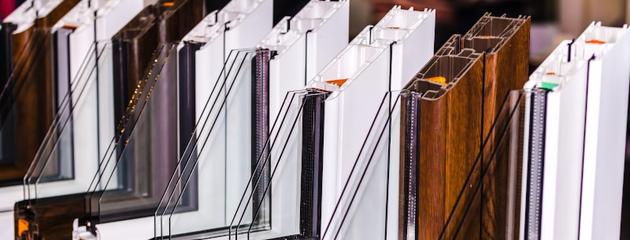
Choosing between double and triple pane windows comes down to climate, comfort goals, and how well the full window system is built and installed.
Short answer: A well-made double-pane window is often enough in milder Canadian climates or well-sealed homes. Triple-pane glass usually helps more where winters are long and cold, rooms feel chilly beside the glass, condensation is a recurring issue, or street noise is hard to ignore. Extra glass is not a cure-all: frame design, air sealing, and installation quality often matter as much as the pane count.
This guide compares double vs triple pane windows in plain language so you can match the glass package to your home, not to a slogan.
H2: Key takeaways
Why this change: Softens or removes unverified savings / payback / ROI figures the live page could not source — CCW SOP: no invented stats. Tightens wording for CCW voice (shorter, plain Canadian English) without changing the underlying technical advice.
- In colder Canadian regions, triple-pane windows usually provide noticeably better comfort near the glass during winter months.
- The biggest real-world difference is often not energy savings alone, but reduced drafts, interior condensation, and outside noise.
- We regularly see older homes where upgrading from aging double-pane units to modern triple-pane windows improves room comfort immediately — especially in bedrooms and large living areas.
- A properly installed high-quality double-pane window can still perform very well in moderate climates or well-insulated homes.
- Glass package matters, but installation quality, frame design, and air sealing often have just as much impact on long-term performance.
- Triple-pane windows usually make the most sense in colder climates such as Alberta, Manitoba, Ontario, Quebec, and Atlantic Canada.
- In renovation projects, the “best” option is rarely universal. The right balance depends on climate, window size, sun exposure, noise levels, and the condition of the existing opening.
- Double-pane windows use two panes and one sealed cavity; triple-pane windows use three panes and two cavities.
- In colder Canadian regions, triple pane often feels warmer beside the glass and can cut draft sensation, condensation risk, and outside noise.
- In milder regions, a high-quality double-pane unit with Low-E coatings and gas fill can still perform very well.
- Comfort gains from triple pane are usually clearer than any guaranteed bill savings percentage.
- Glass package, frame, spacers, and professional installation work together. A poorly installed triple-pane unit can underperform a carefully installed double-pane one.
- Canadian Choice Windows & Doors builds Canadian-made uPVC casement windows and can help you choose the right glass package for your climate and openings.
H2: What are double-pane windows?
Why this change: Supporting: triple pane vs double pane (~140); double vs triple pane windows canada; triple pane windows canada (~110)
Double-pane (dual-glazed) windows have been the standard for decades. They consist of:
- Two panes of glass separated by one sealed cavity.
- Fill the cavity with gas (argon or krypton) for insulation.
- Low-E coatings are applied to glass to reduce the transfer of UV and infrared heat.
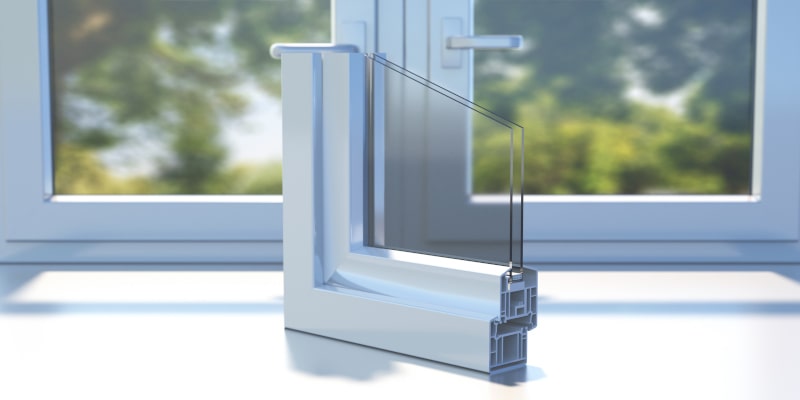
Double-pane (dual-glazed) windows have been the everyday standard for decades. They typically include:
- Two panes of glass separated by one sealed cavity
- An inert gas fill (often argon, sometimes krypton) in that cavity
- Low-E coatings that help manage heat and UV transfer
H3: Benefits of double-pane windows
Why this change: Tightens wording for CCW voice (shorter, plain Canadian English) without changing the underlying technical advice.
- Better insulation than single-pane: reduces heat loss in winter and heat gain in summer.
- Noise reduction: one cavity helps block outside noise.
- Condensation resistance: less fogging compared to single-pane.
- Lower upfront cost than triple-pane.
- Design versatility: available in vinyl, aluminum, fibreglass, and wood frames.
- Clear improvement over single-pane glass for winter heat loss and summer heat gain
- Useful noise reduction from the sealed cavity
- Better condensation resistance than single pane when the unit is sealed and installed correctly
- Lower upfront cost than triple pane in most projects
- Lighter units that are easier to handle in many openings
H3: Drawbacks of double-pane windows
Why this change: Tightens wording for CCW voice (shorter, plain Canadian English) without changing the underlying technical advice.
- Moderate energy efficiency: less effective than triple-pane in harsh Canadian climates.
- Noise reduction limited: not ideal for homes near highways or airports.
- Seal failure risk: condensation or fogging can occur if the spacer system degrades.
- Less insulation than a comparable triple-pane package in harsh winter climates
- More limited noise control near highways, airports, or busy streets
- Like any insulated glass unit (IGU), seals can fail over time if manufacture or installation is poor
H2: What are triple-pane windows?
Why this change: Core section flow (what is double / triple → compare → climate → install → choose → FAQ → CTA).
Triple-pane (triple-glazed) windows add another layer of performance:
- Three panes of glass with two sealed cavities.
- Each cavity is filled with argon or krypton gas.
- Often combined with double Low-E coatings and warm-edge spacers.
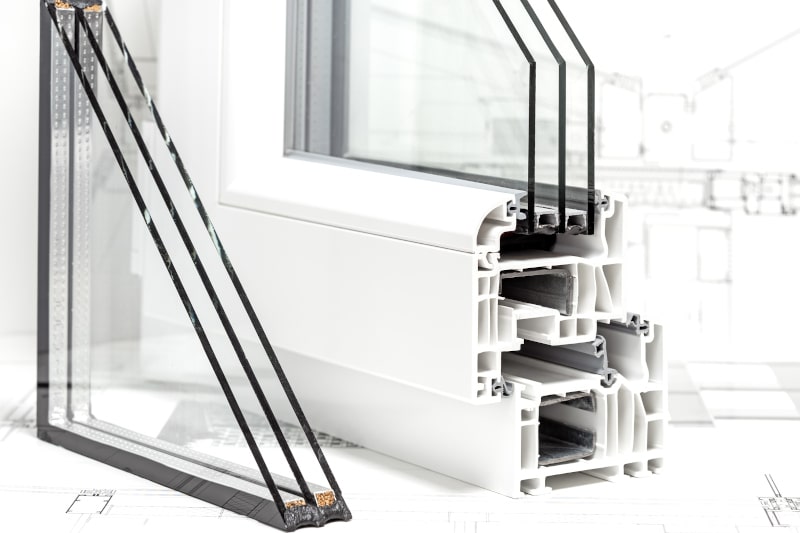
Triple-pane (triple-glazed) windows add another layer of glass and another sealed cavity:
- Three panes of glass with two sealed cavities
- Gas fill in each cavity
- Often paired with dual Low-E coatings and warm-edge spacers
H3: Benefits of triple-pane windows
Why this change: Tightens wording for CCW voice (shorter, plain Canadian English) without changing the underlying technical advice.
- Superior insulation: R-values typically range from R-6 to R-9, which is double that of a double-pane window.
- Excellent noise reduction: ideal for urban centres or homes near busy streets.
- Consistent indoor comfort: minimizes drafts and temperature swings.
- Potential energy savings: can reduce heating/cooling bills by 10–20%.
- Better condensation resistance due to improved thermal separation.
- Stronger insulation potential than a typical double-pane package (higher R-value / lower U-value ranges are common in industry literature)
- Noticeable comfort near the glass in cold weather for many homes
- Stronger noise reduction when street or urban sound is a priority
- Improved condensation resistance when the full system is sound
H3: Drawbacks of triple-pane windows
Why this change: Tightens wording for CCW voice (shorter, plain Canadian English) without changing the underlying technical advice.
- Higher initial cost: typically 10–15% more than double-pane.
- Heavier units: require stronger frames and professional installation.
- Slightly reduced light transmittance compared to a double-pane.
- Seal failures are possible (as with all IGUs) if not manufactured/installed correctly.
- Higher upfront cost than double pane
- Heavier units that need frames and hardware designed for the load
- Slightly reduced light transmittance versus a comparable double-pane unit
- Seal failures are still possible if manufacturing or installation is weak
Why this change: Keeps the already-live expert quote (Helen/Tony) — not newly invented — and formats it as a proper quote block with the author about-page link. Retitles this section for clearer intent/scan fit (live “Double Pane vs. Triple Pane: Direct Comparison” → refreshed “Double pane vs triple pane: direct comparison”) while preserving hierarchy level.
Double Pane vs. Triple Pane: Direct Comparison
| Feature | Double-Pane | Triple-Pane |
|---|---|---|
| Number of panes | 2 | 3 |
| Insulating cavities | 1 | 2 |
| Gas fill | Argon or krypton | Argon or krypton |
| R-value (insulation) | R-3 to R-5 | R-6 to R-9 |
| Energy efficiency | Good | Superior |
| Noise reduction | Moderate | Excellent |
| Condensation resistance | Good | Excellent |
| Weight | Lighter | Heavier |
| Cost | Lower upfront | Higher upfront, better ROI |
“We often recommend triple-pane windows in cold-climate provinces. Their added insulation pays off within a few winters, especially in energy-intensive homes,” says Tony Wong, Project Manager at Canadian Choice Windows & Doors™ .
H2: Double pane vs triple pane: direct comparison
| Feature | Double pane | Triple pane |
|---|---|---|
| Number of panes | Two | Three |
| Insulating cavities | One | Two |
| Gas fill | Argon or krypton (typical) | Argon or krypton (typical) |
| Insulation (typical ranges) | Often about R-3 to R-5 | Often about R-6 to R-9 |
| Energy efficiency | Good when Low-E + gas + seal are solid | Stronger thermal performance potential |
| Noise reduction | Moderate | Excellent in many urban or roadside settings |
| Condensation resistance | Good | Often better at the glass surface |
| Weight | Lighter | Heavier |
| Upfront cost | Lower | Higher |
Typical R-value and U-value ranges vary by coatings, spacers, gas, and frame. Treat them as directional, not a promise for every product.
“The right choice isn’t one-size-fits-all. We match window performance to each home’s location, exposure, and energy goals,” explains Helen Sin, Consumer Success Manager at Canadian Choice Windows & Doors.
Why this change: Retitles this section for clearer intent/scan fit (live “Energy Efficiency and Performance” → refreshed “Energy efficiency and Canadian climate”) while preserving hierarchy level.
Energy Efficiency and Performance
H2: Energy efficiency and Canadian climate
Why this change: Retitles this section for clearer intent/scan fit (live “R-Value and U-Value” → refreshed “R-value and U-value, in plain terms”) while preserving hierarchy level. Tightens wording for CCW voice (shorter, plain Canadian English) without changing the underlying technical advice.
R-Value and U-Value
- R-value measures a window’s resistance to heat flow — higher = better insulation.
- U-value measures the rate of heat transfer — lower = less heat loss.
- Double-pane window: Typically R-3 to R-5, U ≈ 0.30–0.35 — adequate insulation for moderate climates.
- Triple-pane windows: Typically R-6 to R-9, U ≈ 0.15–0.25 — superior insulation, improved comfort, and energy savings in harsh climates.
H3: R-value and U-value, in plain terms
- R-value measures resistance to heat flow. Higher generally means better insulation.
- U-value measures heat transfer. Lower generally means less heat loss.
Double-pane packages often land in a moderate insulation band. Triple-pane packages often land in a stronger band. Exact numbers depend on the full IGU and frame, not the pane count alone.
Why this change: Retitles this section for clearer intent/scan fit (live “Canadian Climate Considerations” → refreshed “When double pane is often enough”) while preserving hierarchy level.
Canadian Climate Considerations
- Cold Regions — Prairies, Northern Ontario, Atlantic Canada Long, cold winters and high heating loads. Triple-pane windows are highly recommended for enhanced comfort, improved energy efficiency, and reduced condensation.
- Long, cold winters and high heating loads.
- Triple-pane windows are highly recommended for enhanced comfort, improved energy efficiency, and reduced condensation.
- Milder Regions — BC Coast, Southern Ontario Milder winters and lower heating demand. A high-performance double-pane window with low-e coatings and a gas fill may be sufficient.
- Milder winters and lower heating demand.
- A high-performance double-pane window with low-e coatings and a gas fill may be sufficient.
“The right choice isn’t one-size-fits-all. We match window performance to each home’s location, exposure, and energy goals,” explains Helen Sin, Consumer Success Manager at Canadian Choice Windows & Doors™ .
H3: When double pane is often enough
- Milder winters (for example, parts of the B.C. coast or sheltered southern Ontario locations)
- Homes that are already well insulated and airtight
- Openings where budget and weight matter more than maximum glass insulation
- Situations where a modern Low-E, gas-filled double-pane unit replaces aging single- or early double-pane glass
Why this change: Secondary: Climate/comfort decision help (when double is enough vs when triple helps)
H3: When triple pane usually helps more
- Long, cold winters and high heating loads (Prairies, northern Ontario, much of Quebec, Atlantic Canada, and similar climates)
- Rooms that stay cold beside the glass even when the furnace is working
- Recurring interior condensation on otherwise maintained windows
- Homes near busy streets, transit corridors, or airports where quieter rooms matter
Extra glass does not fix a failed frame, weak flashing, or a drafty install. In Canadian winters, the whole window system has to work together.
H2: Installation and maintenance
H3: Installation
Why this change: Tightens wording for CCW voice (shorter, plain Canadian English) without changing the underlying technical advice.
- Both types require professional installation to ensure airtight seals.
- Triple-pane units weigh more; therefore, frames and hardware must be engineered to handle the additional load.
- Proper flashing, insulation, and sealing are critical for performance.
Both double- and triple-pane windows need professional installation for airtight seals, correct flashing, and proper insulation around the frame. Triple-pane units are heavier, so frames and hardware must be engineered for the added load. Poor installation can erase much of the comfort benefit you paid for.
H3: Maintenance
Why this change: Adds the verified 25-year transferable warranty only where a product solution is mentioned — required CCW fact; never “lifetime.”
- Cleaning: same for both types (glass, tracks, frames).
- Seal checks: look for condensation/fogging.
- Triple-pane: slightly more complex IGUs → replacement can cost more if seals fail.
- Clean glass, tracks, and frames the same way for both types
- Watch for fogging between panes, which can signal seal failure
- If an IGU fails, replacement complexity and cost can be higher on triple-pane units because the glass package is more involved
Canadian Choice Windows & Doors focuses on Canadian-made uPVC casement windows with DraftLOCK sealing technology and backs qualifying products with a 25-year transferable warranty. That durability story sits alongside glass choice: pane count is one decision, not the only one.
Why this change: Adds one soft contextual link to the windows hub when replacement is the real fix — keeps transactional intent on /windows.html, not on this blog URL. Softens or removes unverified savings / payback / ROI figures the live page could not source — CCW SOP: no invented stats. Retitles this section for clearer intent/scan fit (live “Choosing Between Double and Triple Pane” → refreshed “How to choose for your home”) while preserving hierarchy level. Tightens wording for CCW voice (shorter, plain Canadian English) without changing the underlying technical advice.
Choosing Between Double and Triple Pane
| Factor | Double-Pane Windows | Triple-Pane Windows |
|---|---|---|
| Climate Zone | Suitable for mild to moderate Canadian climates (e.g., those in the prairies). | Ideal for harsh winter regions (e.g., ). |
| Energy Bills | Offers sound insulation, reducing heating/cooling costs compared to single-pane. | Provides maximum thermal efficiency, lowering energy use in cold climates. |
| Noise Exposure | Moderate sound reduction; sufficient for quieter suburban or rural areas. | Superior noise control — effective for homes near highways, airports, or busy urban streets. |
| Budget | More cost-effective upfront; strong ROI in mild climates. | Higher initial cost, but can pay off long-term through lower bills and rebates. |
| Design Options | Available in vinyl, aluminum, fibreglass, and wood frames; lighter weight. | Also available in all primary frame materials; heavier construction for added durability. |
H2: How to choose for your home
Use this simple checklist:
1. Climate: How cold and windy is a typical winter where you live? 2. Comfort: Do rooms feel chilly or noisy beside current windows? 3. Opening and exposure: Large north-facing glass and wind-exposed walls often benefit more from stronger packages. 4. Budget: Triple pane usually costs more up front; weigh that against comfort and noise priorities, not invented payback timelines. 5. System quality: Ask about Low-E, gas fill, spacers, frame performance, and who installs the unit.
If you want a hands-on walkthrough of options, our windows overview is a practical next step before you compare quotes.
Why this change: Retitles this section for clearer intent/scan fit (live “Conclusion” → refreshed “FAQ”) while preserving hierarchy level.
Conclusion
Both double-pane and triple-pane windows represent a significant improvement over outdated single-pane units. Double-pane windows are a cost-effective, versatile, and efficient option. In contrast, triple-pane windows deliver top-tier performance, insulation, and noise reduction, making them ideal for Canadian climates where energy costs and comfort are crucial.
At Canadian Choice Windows & Doors, we help homeowners determine which option best suits their budget, climate, and comfort goals. Book a free consultation to explore the best-performing windows for your home.
H2: FAQ
Why this change: Softens or removes unverified savings / payback / ROI figures the live page could not source — CCW SOP: no invented stats. Retitles this section for clearer intent/scan fit (live “FAQ Section” → refreshed “Are triple-pane windows worth it in Canada?”) while preserving hierarchy level.
FAQ Section
H3: Are triple-pane windows worth it in Canada?
Often yes in colder regions when comfort, condensation, or noise is the problem. In milder climates, a high-quality double-pane window can be the smarter balance. Worth is about your home and goals, not a universal payback claim.
Why this change: Retitles this section for clearer intent/scan fit (live “Q1: Are triple-pane windows worth the extra cost in Canada?” → refreshed “What is the R-value difference between double and triple pane?”) while preserving hierarchy level. Tightens wording for CCW voice (shorter, plain Canadian English) without changing the underlying technical advice.
Q1: Are triple-pane windows worth the extra cost in Canada?
Yes. While triple-pane windows cost more upfront, they provide superior insulation, noise reduction, and long-term energy savings. In cold Canadian climates, they often pay for themselves within 5–10 years through reduced heating bills.
H3: What is the R-value difference between double and triple pane?
Industry-typical ranges are often about R-3 to R-5 for many double-pane packages and about R-6 to R-9 for many triple-pane packages. Coatings, gas, spacers, and frames change the result.
Why this change: Retitles this section for clearer intent/scan fit (live “Q2: What is the R-value difference between double-pane and triple-pane windows?” → refreshed “Do triple-pane windows reduce outside noise better than double pane?”) while preserving hierarchy level. Tightens wording for CCW voice (shorter, plain Canadian English) without changing the underlying technical advice.
Q2: What is the R-value difference between double-pane and triple-pane windows?
Double-pane windows typically have an R-value of R-3 to R-5, while triple-pane windows achieve R-6 to R-9. A higher R-value means better insulation and improved comfort.
H3: Do triple-pane windows reduce outside noise better than double pane?
Usually. The extra pane and second cavity give sound another barrier to cross, which helps near busy streets, airports, or dense urban areas.
Why this change: Retitles this section for clearer intent/scan fit (live “Q3: Do triple-pane windows reduce outside noise better than double-pane?” → refreshed “Can I use double-pane windows in a cold climate?”) while preserving hierarchy level. Tightens wording for CCW voice (shorter, plain Canadian English) without changing the underlying technical advice.
Q3: Do triple-pane windows reduce outside noise better than double-pane?
Yes. With an extra pane of glass and an additional gas-filled cavity, triple-pane windows provide excellent noise reduction — ideal for homes near busy streets, airports, or urban areas.
H3: Can I use double-pane windows in a cold climate?
Yes. Many cold-climate homes still use strong double-pane packages successfully. Triple pane is often recommended when you want more insulation at the glass, especially on large or exposed openings, but installation quality still comes first.
Why this change: Retitles this section for clearer intent/scan fit (live “Q4: Can I install double-pane windows instead of triple-pane in a cold climate?” → refreshed “How long do double-pane and triple-pane windows last?”) while preserving hierarchy level. Tightens wording for CCW voice (shorter, plain Canadian English) without changing the underlying technical advice.
Q4: Can I install double-pane windows instead of triple-pane in a cold climate?
Yes, but triple-pane is recommended in harsh climates like the Prairies or Northern Ontario. Double-pane windows may still be acceptable in milder regions if they have Low-E coatings and argon gas fills.
H3: How long do double-pane and triple-pane windows last?
With sound manufacture, correct installation, and basic care, both can serve for decades. Seal failure is possible on any IGU; professional service is the right path if fogging appears between panes.
Why this change: Adds the verified 25-year transferable warranty only where a product solution is mentioned — required CCW fact; never “lifetime.” Retitles this section for clearer intent/scan fit (live “Q5: How long do double-pane and triple-pane windows last?” → refreshed “Ready to compare options for your home?”) while preserving hierarchy level.
Q5: How long do double-pane and triple-pane windows last?
Both types can last 20–30 years with proper installation and maintenance. Triple-pane units are more complex and may require professional servicing if a seal fails.
H2: Ready to compare options for your home?
If you are weighing double vs triple pane windows for a renovation or replacement, we can walk through climate, openings, and comfort priorities without pressure. Book a free in-home assessment to see which glass package fits your Canadian home, backed by Canadian-made craftsmanship and a 25-year transferable warranty on qualifying products.